2016年10月3日 星期一

2016年10月3日星期ㄧ--第19課:馬太福音第16章--活動報導

上課時間:5:50-6:40                                        教師:尤黎明弟兄。英文教師:周志昶弟兄
                                                                             教師助理:尤姐妹
                                                                             攝影:周志昶弟兄


                                                                             文字:尤姐妹

今天的教師:劉宇森


班長:周語晟

 上課準備工作積極在進行!


大家就定位囉!

音樂指揮:周語晟
開會聖詩:67 我靈鎮靜
開會祈禱:王金鳳


今天的教師:劉宇森                 

經文

馬太福音第16章

馬太福音16:1-12

法利賽人和撒都該人向救主求看神蹟

上課之前,將以下短句寫在白板上:
透過天使的顯現
透過聖靈
透過相信朋友或家人的話
透過目睹奇蹟
課程一開始,請學生從白板上選出一個能夠貼切描述自己希望如何獲得福音見證的短句。請幾位學生報告他們選擇的短句,並說明選擇此一短句的理由。


語晟回答: 透過天使的顯現。


金鳳回答: 透過相信朋友或家人的話


岱娜回答: 透過聖靈。感受聖靈要非常仔細才能感受。


經文馬太福音第16章:1

林禹念:
  1. 法利賽人和撒都該人來試探耶穌,請他從天上顯個神蹟給他們看。

經文馬太福音第16章:2

翰洋念:
  1. 耶穌回答說:晚上天發紅,你們就說:天必要晴。

經文馬太福音第16章:3

語晟念:
  1. 早晨天發紅,又發黑,你們就說:今日必有風雨。你們知道分辨天上的氣色,倒不能分辨這時候的神蹟。

經文馬太福音第16章:4

語柔念:
  1. 一個邪惡淫亂的世代求神蹟,除了約拿的神蹟以外,再沒有神蹟給他看。耶穌就離開他

討論16:4的意思?
  • 主說祂會提供什麼樣的神蹟?
說明耶穌指的是舊約的先知約拿,他被一條「大魚」吞入腹中(約拿書1:1-17)。約拿被「埋葬」在魚腹中三天後再被吐出來,象徵著耶穌基督的死亡、埋葬和第三天從墳墓中復活。

 前排向後轉與後排討論:分二組討論


  前排向後轉與後排討論:分二組討論


 一番熱烈討論之後........


  一番熱烈討論之後........


 約柔回答:耶穌基督復活之後,再沒有神蹟。


 蔓妮回答:


 宇森說:我們用不對的方式是不會有神蹟!


  •  主說祂會提供什麼樣的神蹟?
說明耶穌指的是舊約的先知約拿,他被一條「大魚」吞入腹中(約拿書1:1-17)。約拿被「埋葬」在魚腹中三天後再被吐出來,象徵著耶穌基督的死亡、埋葬和第三天從墳墓中復活。

  • 救主斥責法利賽人和撒都該人之後,祂做了什麼?
  • • 
     我們可以從這個以不正當的方式尋求靈性真理的經驗中學到什麼?
  • 但是要確定他們指出以下這項真理:
  • 我們無法透過求看神蹟,而得到靈性真理。)
  • 馬太福音16:11-12
  • 11 我對你們說:要防備法利賽人和撒都該人的酵,這話不是指著餅說的,你們怎麼不明白呢?
  • 12 門徒這才曉得他說的不是叫他們防備餅的酵,乃是防備法利賽人和撒都該人的教訓。

  • 將馬太福音16:5-12作摘要,說明救主警告祂的門徒有關法利賽人和撒都該人的錯誤教導。

 說明耶穌斥責法利賽人和撒都該人求看神蹟之後,祂教導門徒如何獲得對真理的見證。
馬太福音16:13-14
  1. 耶穌到了該撒利亞腓立比的境內,就問門徒說:人說我(有古卷沒有我字)人子是誰?
  2. 他們說:有人說是施洗的約翰;有人說是以利亞;又有人說是耶利米或是先知裡的一位。
  3. 耶穌說:你們說我是誰?
  4. 西門彼得回答說:你是基督,是永生神的兒子。

 關於如何才能獲得對耶穌基督的見證,我們可以從這幾節經文中學到什麼?
(學生的答案應反映出這項真理:我們透過聖靈的啟示而獲得對耶穌基督的見證。)
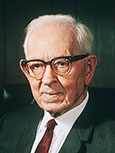
約瑟‧斐亭‧斯密會長
「神的靈對人的靈說話,甚至比個人跟天上人物直接接觸,更有力量傳講真理,也更能讓人理解真理。真理透過聖靈而被編入身體的每一根纖維及肌肉,因此令人無法忘記」(參閱總會會長的教訓:約瑟·斐亭·斯密
 請兩位學生到教室前面來,參與角色扮演。
指派一位學生扮演自己,..........嘉祥飾教友
另一位學生扮演非本教會成員的朋友。.........翰博飾非教友
給扮演非成員朋友的學生一張寫著以下兩個問題的紙條。請這位學生一次讀出一個問題,並請另一位學生回答。


  1. 翰博問:1. 
     我聽說你的教會自稱是耶穌基督唯一真實的教會。你相信嗎?
  2. 嘉祥回答:嗯.....嗯.......

  1. 翰博問:2. 
     我的教會也相信耶穌基督,那麼為什麼你認為你的教會是唯一真實的教會?
  2. 嘉祥回答:這是個好問題!(新成員的嘉祥幽默地迴避問題,惹來大家一陣笑聲!)

 翰洋來救援嘉祥:我們教會有聖職、聖殿、先知和使徒。


 學生繼續研讀馬太福音第16章時,請他們找出一些真理,可以幫我們了解,並向他人說明是什麼讓耶穌基督後期聖徒教會與眾不同,成為主在世上的教會。

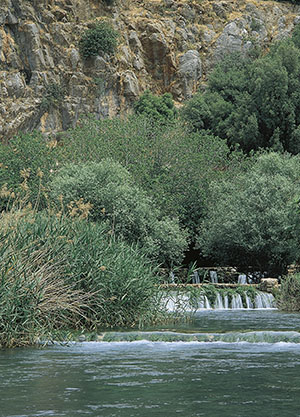
凱撒利亞‧腓立比
凱撒利亞·腓立比
提醒學生,當耶穌問祂的門徒有關祂身分的問題時,他們是在一個名為凱撒利亞·腓立比的地區(見馬太福音16:13)。可能的話,展示一張凱撒利亞·腓立比的圖像(見經文指南,聖經照片26,「凱撒利亞·腓立比」)。請學生指出這張圖片的河流和樹木背後是什麼。說明救主與門徒繼續進行討論時,凱撒利亞·腓立比的巨大岩層提供了一個深具意義的環境。


 尤老師幫助飾演非教友的翰博再次挑戰教友的問題,聖職的權柄的經文出處?

這些男、女青太適合演戲了!他們都因參與活動......整個活潑起來...........


 舒雅念:馬太福音16:15-16
  1. 耶穌說:你們說我是誰?

  1. 西門彼得回答說:你是基督,是永生神的兒子。
 馬太福音:16:17-20
  1. 耶穌對他說:西門巴約拿,你是有福的!因為這不是屬血肉的指示你的,乃是我在天上的父指示的。
  2. 我還告訴你,你是彼得,我要把我的教會建造在這磐石上;陰間的權柄(權柄:原文是門),不能勝過他。
  3. 我要把天國的鑰匙給你,凡你在地上所捆綁的,在天上也要捆綁;凡你在地上所釋放的,在天上也要釋放。
  4. 當下,耶穌囑咐門徒,不可對人說他是基督。

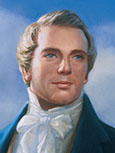
先知約瑟‧斯密
「耶穌在祂的教訓中說:『我要把我的教會建造在這磐石上;……』〔馬太福音16:18〕,這磐石是什麼呢?就是啟示」(

你會如何摘要敘述記錄在第18節中,救主有關祂教會的教導?(學生應指出類似以下的這項原則:耶穌基督的教會是建立在從神而來的啟示上。


 根據第19節,救主應許賜給彼得什麼?

 我們可以從救主給彼得的應許中學到什麼教義?(確定學生能指出以下這項真理:耶穌基督將祂國度的權鑰交託給祂所揀選的先知和使徒。)


  • 你是怎麼知道耶穌基督是神的兒子和你的救主?你做了什麼來準備自己從聖靈獲得這項見證?
請學生沉思自己對救主的見證。鼓勵他們在課堂筆記或經文研讀日記中記錄下他們可以怎樣鞏固自己的見證,或他們可能需要做什麼以透過聖靈獲得見證。

翊軒念:
 馬太福音16:23
  1. 耶穌轉過來,對彼得說:撒但,退我後邊去吧!你是絆我腳的;因為你不體貼神的意思,只體貼人的意思。
體貼=渴望。
當我們把經文中的體貼轉換成渴望時,我們更能了解經文的意思。


馬太福音16:21-28

耶穌教導跟從祂的真義

將馬太福音16:21-28作摘要,說明耶穌談到祂的贖罪犧牲。
祂也教導門徒,若要愉快地跟從祂,他們必須願意脫離自然人(見摩賽亞書3:19),而且要服從和犧牲。

  • 你會如何摘要敘述主為何將聖職權鑰賜給祂的先知和使徒?(學生應指出類似以下的這項真理:需要有聖職權鑰才能管理主在世上的教會。)

 今天時間關係:英文經文明天補上!英文經文的時間非常重要!


2016年10月2日 星期日

Lesson 19: Matthew 16

Lesson 19: Matthew 16

New Testament Seminary Teacher Manual, 2016

Introduction

Jesus Christ rebuked the Pharisees and Sadducees who sought a sign of His divinity. Peter bore testimony that Jesus is the Christ and was promised the keys of the kingdom. Jesus taught His disciples to take up their cross and follow Him.

Suggestions for Teaching

Matthew 16:1–12

The Pharisees and the Sadducees seek a sign from the Savior

Before class, write the following phrases on the board:
Through the appearance of an angel
Through the Holy Ghost
Through believing the words of a friend or familymember
Through witnessing a miracle
To begin the lesson, ask students to choose the phrase on the board that best describes how they would like to receive a testimony of the gospel. Invite a few students to report which phrase they chose and explain why they chose it.
Invite students as they study Matthew 16 to look for truths concerning how the Lord helps us to receive and strengthen our testimonies of the gospel.
Invite a student to read Matthew 16:1 aloud. Ask students to follow along, looking for what the Pharisees and Sadducees wanted from Jesus.
  • • 
    What did the Pharisees and Sadducees want from Jesus?
  • • 
    What do you think it means that the Pharisees and Sadducees were “tempting” Jesus when they asked for a sign? (One meaning of the verb tempt is to try or to test.)
Invite several students to take turns reading aloud fromMatthew 16:2–4. Ask the class to follow along, looking for the Savior’s response to the Pharisees and Sadducees.
  • • 
    What sign did the Lord say He would provide?
Explain that Jesus was referring to the Old Testament prophet Jonah, who had been swallowed by a “great fish” (Jonah 1:17). Jonah’s “burial” in and then coming forth from the belly of the fish after three days symbolized the death, burial, and Resurrection of Jesus Christ from the tomb on the third day.
  • • 
    What did the Savior do after He rebuked the Pharisees and Sadducees?
  • • 
    What can we learn from this experience about the improper way to seek spiritual truth? (Students may use different words, but make sure they identify the following truth: We do not receive spiritual truth by seeking for signs.)
Summarize Matthew 16:5–12 by explaining that the Savior warned His disciples of the Pharisees’ and Sadducees’ false teachings. (Note: This event will be addressed in greater detail in the lesson on Mark 8.)

Matthew 16:13–20

Peter testifies of Jesus Christ and is promised the keys of the kingdom

Explain that after Jesus rebuked the Pharisees and Sadducees for seeking a sign, He taught His disciples how to receive a testimony of the truth. Invite a student to read Matthew 16:13–14 aloud. Ask the class to follow along, looking for the question Jesus asked and the response His disciples gave.
  • • 
    What did the Savior ask His disciples? How did they answer? (You may need to explain that Elias and Jeremias are the Old Testament prophets Elijah and Jeremiah.)
  • • 
    What can their response tell us about how well people understood who Jesus was at this point in His ministry?
Invite a student to read Matthew 16:15–17 aloud. Ask the class to follow along, looking for the second question the Savior asked.
  • • 
    What was the second question the Savior asked? How did Peter respond?
  • • 
    According to verse 17, how did Peter know that Jesus Christ is the Son of God? (Point out that Heavenly Father had revealed this truth to him through the Holy Ghost.)
  • • 
    What truth can we learn from these verses about how we can gain a testimony of Jesus Christ? (Students’ answers should reflect the truth that we gain a testimony of Jesus Christ through revelation from the Holy Ghost.)
  • • 
    Why do you think it is important for us to receive a testimony through revelation from the Holy Ghost rather than by some other way?
To help students further understand the role of the Holy Ghost in helping us gain a testimony of the Savior, invite a student to read aloud the following statement by President Joseph Fielding Smith:
President Joseph Fielding Smith
“The Spirit of God speaking to the spirit of man has power to impart truth with greater effect and understanding than the truth can be imparted by personal contact even with heavenly beings. Through the Holy Ghost the truth is woven into the very fibre and sinews of the body so that it cannot be forgotten” (Teachings of Presidents of the Church: Joseph Fielding Smith [2013], 183–84).
  • • 
    What are some things we can do to prepare ourselves to receive revelation through the Holy Ghost?
  • • 
    How did you come to know that Jesus Christ is the Son of God and your Savior? What did you do to prepare to receive that witness from the Holy Ghost?
Invite students to ponder their testimonies of the Savior. Encourage them to record in their class notebooks or scripture study journals how they might strengthen their testimonies or what they may need to do to receive a testimony through the Holy Ghost.
Invite two students to come to the front of the classroom and participate in a role play. Assign one student to represent himself or herself and the other student to represent a friend who is not a member of the Church. Give the student representing the nonmember friend a piece of paper containing the two questions below. Invite the student to read the questions aloud one at a time, and ask the other student to reply. (You may want to encourage the class to suggest possible responses the student answering the questions can give.)
  1. 1. 
    I heard that your church claims to be the only true church of Jesus Christ. Is that what you believe?
  2. 2. 
    My church also believes in Jesus Christ, so why do you think that your church is the only true one?
Thank the students for participating, and invite them to return to their seats.
Invite students as they continue to study Matthew 16 to look for truths that can help us understand and explain to others what distinguishes The Church of Jesus Christ of Latter-day Saints as the Lord’s Church upon the earth.
Caesarea Philippi
Caesarea Philippi
Remind students that when Jesus asked His disciples the questions about His identity, they were in a region called Caesarea Philippi (see Matthew 16:13). If possible, display an image of Caesarea Philippi (seeBible Photographs, no. 26, “Caesarea Philippi”). Ask students to identify what is behind the river and trees in this picture. Explain that the large rock formation at Caesarea Philippi would have provided a meaningful setting as the Savior continued His discussion with His disciples.
Invite a student to read Matthew 16:18–20 aloud. Ask the class to follow along, looking for how the Savior used the concept of a rock to describe the foundation of His Church.
  • • 
    What do you think the Savior meant when He said He would build His Church “upon this rock”? (verse 18).
To help students understand this phrase, invite a student to read aloud the following statements by the Prophet Joseph Smith:
Prophet Joseph Smith
“Jesus in His teachings says, ‘Upon this rock I will build my Church. …’ [Matthew 16:18.] What rock? Revelation” (Teachings of Presidents of the Church: Joseph Smith[2007], 195).
“The Church of Jesus Christ of Latter-day Saints was founded upon direct revelation, as the true Church of God has ever been, according to the Scriptures (Amos 3:7, and Acts 1:2)” (Teachings: Joseph Smith, 195).
  • • 
    How would you summarize the Savior’s teaching about His Church recorded in verse 18? (Students should identify something similar to the following principle: Jesus Christ’s Church is built upon revelation from God. Write this truth on the board.)
  • • 
    How can knowing that The Church of Jesus Christ of Latter-day Saints is built on revelation from God strengthen your testimony of the gospel?
  • • 
    According to verse 19, what did the Savior promise to give Peter?
  • • 
    What doctrine can we learn from the promise the Savior gave to Peter? (Make sure students identify the following truth: Jesus Christ entrusts the keys of His kingdom to His chosen prophets and apostles.)
  • • 
    What are the keys of the kingdom? (The directing power, right, and authority necessary to preside over the kingdom of God on the earth, or the Church of Jesus Christ.)
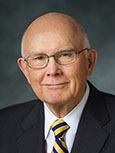
To help students understand what priesthood keys are, invite a student to read aloud the following statement by Elder Dallin H. Oaks of the Quorum of the Twelve Apostles:
Elder Dallin H. Oaks
“‘Priesthood keys are the authority God has given to priesthood [holders] to direct, control, and govern the use of His priesthood on earth’ [Handbook 2: Administering the Church (2010), 2.1.1]. Every act or ordinance performed in the Church is done under the direct or indirect authorization of one holding the keys for that function” (“The Keys and Authority of the Priesthood,” Ensign or Liahona, May 2014, 49).
  • • 
    What did Jesus say that Peter would be able to do because of the keys he would be given?
Explain that among the keys the Savior promised to Peter were the keys of the sealing power. This power allows the ordinances performed under the authority of Church leaders to be valid in heaven. It is also used to bind families together for eternity. In our day, the sealing power is held by the First Presidency and the Quorum of the Twelve Apostles.
  • • 
    How would you summarize why the Lord gives priesthood keys to His prophets and Apostles? (Students should identify a truth similar to the following: Priesthood keys are necessary to administer the Lord’s Church upon the earth.)
Ask a student to read aloud the questions from the role play. Invite the class to explain how they would respond to these questions using the truths they have identified in Matthew 16:18–19. You may also want to invite students to share their testimonies of these truths.
Consider displaying a picture of the current First Presidency and Quorum of the Twelve Apostles (seeLDS.org [for example, Meet Today’s Prophets and Apostles] and the general conference issues of theEnsign or Liahona) and testifying that the same keys given to Peter and the other Apostles anciently are held and used today by the Lord’s living prophets and Apostles.

Matthew 16:21–28

Jesus teaches what it means to follow Him

Summarize Matthew 16:21–28 by explaining that Jesus spoke of His atoning sacrifice. He also taught His disciples that they must be willing to deny the natural man (see Mosiah 3:19), be obedient, and sacrifice in order to cheerfully follow Him.

scripture mastery iconScripture Mastery—Matthew 16:15–19

Encourage students to share with their families what they learned from Matthew 16. Consider choosing a portion of Matthew 16:15–19 to memorize as a class during the coming days. You can find ideas for memorization in the appendix of this manual.

Commentary and Background Information

Matthew 16:1–4. The Pharisees and Sadducees seek a sign

Matthew 16:1–4 relates an exchange between Jesus Christ and some sign-seeking Pharisees and Sadducees, who came “tempting” the Savior to show them a sign (verse 1). (One meaning of the verb tempt is to try or to test.) In response to their request, Jesus rebuked them for being proud of their ability to recognize the signs of changing weather but failing to recognize God’s signs (see verses 2–3). The Savior also taught that “a wicked and adulterous generation seeketh after a sign” (verse 4). When individuals persist in serious sin, one consequence is that they no longer recognize the quiet and gentle whisperings of the Spirit and they demand proof in the form of physical, tangible, or sensational signs.

Matthew 16:4. “The sign of the prophet Jonas”

Elder Bruce R. McConkie of the Quorum of the Twelve Apostles explained the sign of the prophet Jonas:
“Jonah’s burial in and coming forth from the ‘great fish’ (Jonah 1:15–17; 2) symbolizes the death, burial, and resurrection of Christ” (Mormon Doctrine, 2nd ed. [1966], 711–12).

Matthew 16:18. “Upon this rock I will build my church”

“As the Savior taught Peter about revelation, He used a wordplay on Peter’s name, declaring to Simon [Peter], ‘Thou art Peter[Petros], and upon this rock [petra] I will build my church’ (Matthew 16:18). The Greek word petros means an isolated small rock or stone. The Greek word petra can also mean ‘a stone,’ but in addition it can refer to stony soil, bedrock, or a large mass of rock. From these words we learn that it was not upon Peter as a man that the Church would be built, but upon the bedrock of revelation” (New Testament Student Manual [Church Educational System manual, 2014], 53).

Matthew 16:18–19. “The keys of the kingdom”

President Russell M. Nelson of the Quorum of the Twelve Apostles explained how the Lord continues to lead His Church and kingdom on the earth through prophets and sacred priesthood keys:
“The living Lord leads His living Church [see D&C 1:30, 38]! The Lord reveals His will for the Church to His prophet. Yesterday, after we were invited to sustain Thomas S. Monson as President of the Church, we also had the privilege to sustain him, the counselors in the First Presidency, and members of the Quorum of the Twelve Apostles as prophets, seers, and revelators. Think of that! We sustain 15 men as prophets of God! They hold all the priesthood keys that have ever been conferred upon man in this dispensation. …
“[President Gordon B. Hinckley explained,] ‘The First Presidency and the Council of the Twelve Apostles, called and ordained to hold the keys of the priesthood, have the authority and responsibility to govern the Church, to administer its ordinances, to expound its doctrine, and to establish and maintain its practices’ [“God Is at the Helm,” Ensign, May 1994, 54]” (“Sustaining the Prophets,” Ensign or Liahona, Nov. 2014, 75–76).

Matthew 16:21–23. Jesus Christ rebukes Peter

“By focusing only on the Savior’s coming death, Peter failed to understand Jesus Christ’s true mission—the redemption of all mankind. When the Savior rebuked Peter and referred to him as ‘Satan’ [Matthew 16:23; Mark 8:33], He was not implying that Peter was Lucifer. The Hebrew word satan means ‘adversary or tempter.’ Thus, Christ recognized that at that moment Peter had put himself in an adversarial role, in opposition to the Savior’s ultimate saving mission.
“Peter probably meant well when he objected to the teaching that Jesus Christ would have to suffer and be killed (see Matthew 16:22; Mark 8:32). However, if Jesus had accommodated Peter’s wishes by avoiding the suffering of the Atonement, there would have been no redemption from sins and no Resurrection conquering death. All mankind would unavoidably have perished (see Alma 34:9), and God’s work of bringing to pass ‘theimmortality and eternal life of man’ (Moses 1:39) would not have been fulfilled. All this would have served the destructive aims of Satan. In the moment of his impulsive protest, Peter was unwittingly siding with the adversary” (New Testament Student Manual [Church Educational System manual, 2014], 122).

Supplemental Teaching Idea

Matthew 16:24–28. “Take up his cross, and follow me”

Write the following incomplete statement on the board: To follow Jesus Christ, we must …
Invite a few students to take turns reading aloud from Matthew 16:24–28. Ask the class to follow along, looking for counsel the Savior gave to those who seek to follow Him.
  • • 
    What counsel did the Savior give to those who seek to follow Him?
Invite a student to read the following statement aloud:
“Even before the Savior’s Crucifixion, the image of ‘taking up one’s cross’ (see Mark 8:34) would have been a familiar and perhaps troubling one for the disciples. Crucifixion was a common means of execution in the Roman Empire, and its victims were made to carry their own crossbeams to the place of execution (see John 19:16–17). By using this imagery, the Savior vividly taught His disciples what they must be ready for and called upon them to follow His example by submitting to the will of the Father in their lives” (New Testament Student Manual[Church Educational System manual, 2014], 122).
Invite a student to read Matthew 16:24, footnote e, aloud. Ask the class to follow along, looking for how the Joseph SmithTranslation of this verse helps us further understand what it means to take up our cross.
  • • 
    Based on the Joseph Smith Translation of this verse, how would you complete the statement on the board? (After students respond, use their words to complete the statement so it reads something like the following: To follow Jesus Christ, we must deny ourselves of all ungodliness and every worldly lust and keep His commandments.)
Explain that the word ungodliness refers to anything that is evil or unworthy and would prevent us from becoming like Heavenly Father and Jesus Christ.
  • • 
    What are some ways we can seek to deny ourselves of all “ungodliness” and “worldly lusts”?

福音進修班:新竹教堂每日班10月3日課前問卷。